
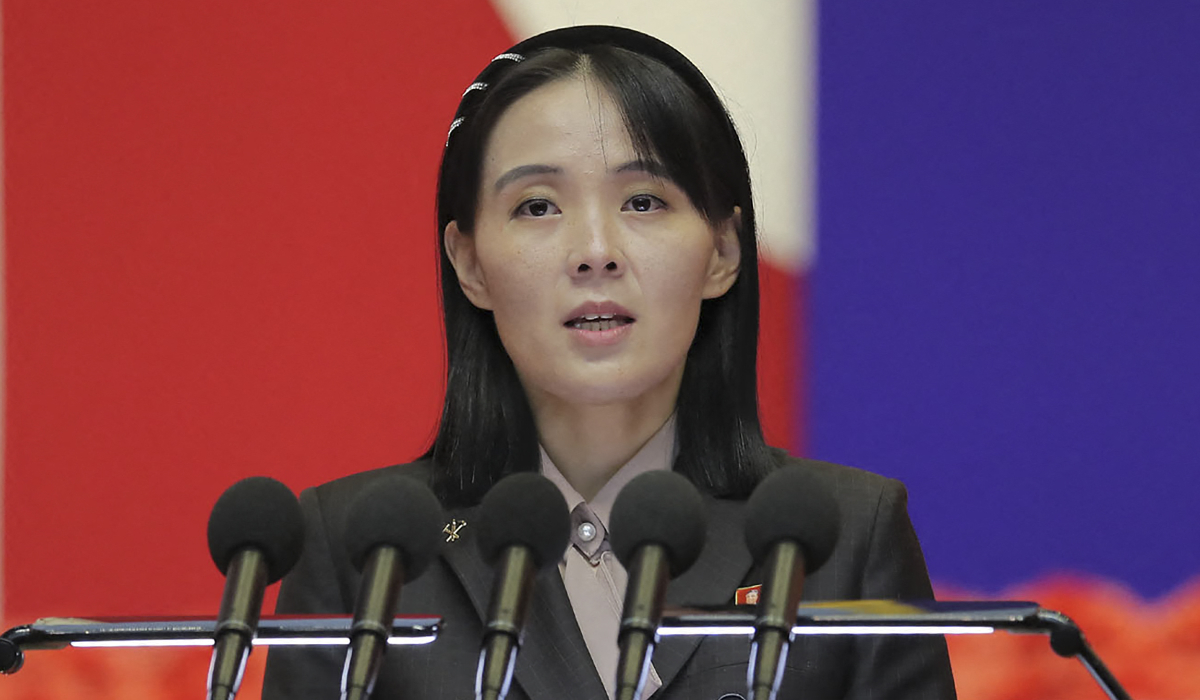
Photo via ndtv.com
Kim Yo Jong Vows Stronger Response to US 'Hostility'
North Korea's leader's sister rejected Binance hacking accusations and signaled no interest in talks with Washington amid weapons testing.
What happened
Kim Yo Jong, the influential sister of North Korean leader Kim Jong Un, issued a warning Wednesday that Pyongyang would mount a 'stronger response' to what it characterizes as Washington's 'invariable hostile policy.' The statement, published by the state news agency KCNA, came days after the FBI attributed North Korea to a $6.3 billion cryptocurrency theft from Binance—one of the largest cyber heists on record.
Kim Yo Jong dismissed the FBI's accusation as 'a grave political provocation' and accused the United States of misleading international opinion by attributing cybercrimes to North Korea. She framed the Binance allegations not as an isolated incident but as part of a broader pattern of American hostility that includes joint US-South Korean military drills and Washington's insistence on North Korea's denuclearization.
Crucially, Kim Yo Jong signaled that Pyongyang sees little value in renewed diplomacy. She said North Korea has 'no need to sit face to face' with 'unreliable and hostile persons,' effectively dampening hopes for any meeting between her brother and President Trump during Trump's planned November trip to Asia for the APEC summit in China. Trump had been pressing advisers to arrange a summit with Kim Jong Un, but Seoul's ambassador to Washington said in October that no concrete progress had been made.
The statement accompanied a pattern of military escalation. North Korea tested strategic cruise missiles fitted with new cluster-munition warheads on Monday, just days after another test of cluster warheads on ballistic missiles. These tests appear designed to bolster North Korea's bargaining position while demonstrating that Pyongyang has alternatives to dialogue—particularly deepening ties with Russia and China that provide economic and diplomatic support.
Trump indicated cautious interest in the Binance question, telling reporters he would discuss it with North Korea 'if' responsibility is confirmed, though he suggested investigators were still examining the facts. That measured stance contrasts with the FBI's definitive attribution to North Korea's TraderTraitor unit.
Chanakya's Move
This is Kim Yo Jong's move to reset negotiating terms. By publicly rejecting dialogue while demonstrating military progress through weapons tests, she signals to Trump that engagement will happen—if at all—only on terms North Korea dictates. The timing is strategic: she frames the Binance accusation not as a law enforcement matter but as evidence of American hostility, collapsing the distinction between crime and geopolitics. This allows her to dismiss the accusation without directly denying it, while using it as rhetorical cover for military escalation. She's betting that Russia and China provide enough economic and security cover that North Korea no longer needs sanctions relief from Washington. The counter-move for the US would be either to delink cyber accusations from diplomatic talks (treating them separately) or to present a credible offer of recognition and sanctions relief conditional on specific nuclear limits—something Trump has hinted at but not formalized. If Trump avoids the Binance issue in favor of near-term summit theatrics, Kim Yo Jong wins: North Korea escalates without constraint.