
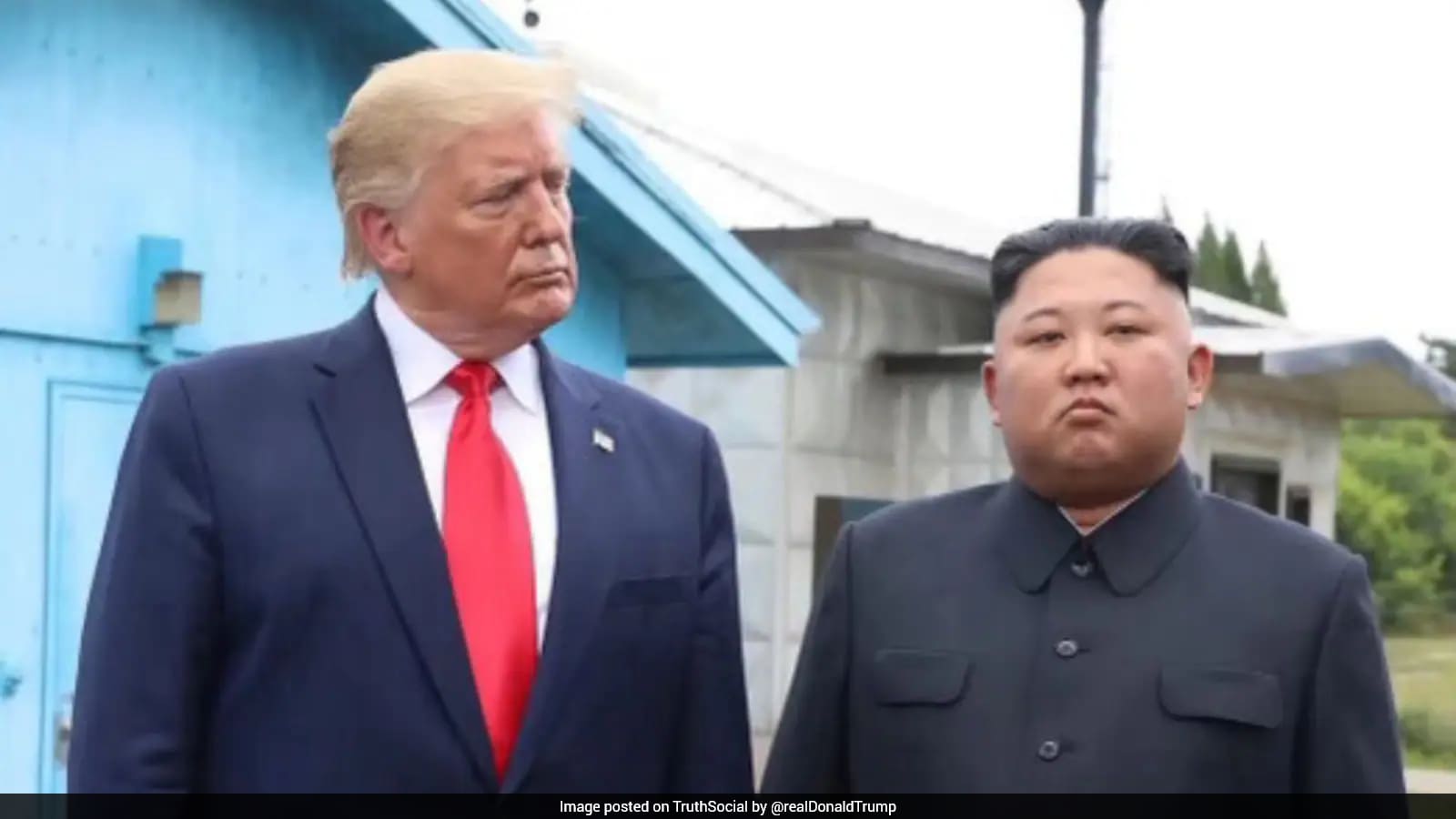
Photo via hindustantimes.com
Kim Rejects Trump While Upgrading Russia Ties
North Korean leader ignored Trump's contacts after Asia visit, then personally received Russian ambassador in rare diplomatic shift.
What happened
North Korean leader Kim Jong Un has rebuffed repeated attempts by President Trump to establish contact, marking a stark departure from their earlier diplomatic engagement. Trump tried to reach Kim through established phone lines and delivered a letter via North Korean representatives at the United Nations, but his overture was ignored and the letter returned unopened, according to reporting from the Wall Street Journal.
The timing is significant: Trump made his push during an Asia trip last week, suggesting he could arrange a meeting and asking aides to coordinate it. Kim offered no response. Days after Trump left the region without meeting Kim—despite Trump's earlier hints that a summit could occur—Kim held a ceremonial event that underscores his strategic pivot. On November 22, Kim personally received credentials from Russia's new ambassador, the first time in more than 30 years that North Korea's top leader has directly performed this diplomatic task. The ceremony included envoys from multiple countries and marked a rare protocol departure that elevates Kim's presidential stature.
In remarks at the credential ceremony, Kim declared that North Korea seeks "power and capability" to ensure security and peace but "neither pursues supremacy nor expansion." He characterized the global environment as one of "unstable security crisis and political and economic chaos" and pledged to build foreign relations based on mutual respect and national sovereignty. The messaging frames North Korean military development as defensive necessity rather than aggressive ambition.
This pivot coincides with North Korea's accelerating nuclear program. Intelligence assessments show North Korea continues to expand its uranium-enrichment capacity and produce weapons-grade fissile material, with experts estimating the country could have enough material for 90 warheads and possibly 200 by 2027. North Korea has also deepened military cooperation with Russia, deploying an estimated 10,000 troops to aid Moscow's war effort in Ukraine in exchange for military and economic aid, and has tightened bilateral ties through a June 2024 strategic partnership agreement.
Chanakya's Move
Kim's move is a calculated signal: ignore Trump's overture to avoid appearing weak to hardliners or subordinate to US engagement, while simultaneously elevating Russia's diplomatic standing by personally receiving its ambassador. This consolidates Kim's alignment with Moscow at a moment when North Korea's troops fight in Ukraine and Russian technology and economic support matter most. The "security not supremacy" rhetoric reassures Beijing and Moscow that North Korea's arsenal growth serves defense, not regional conquest, forestalling Chinese or Russian pressure to curb nuclear ambitions. Trump's isolation—no meeting despite his Asia trip—weakens his negotiating position domestically and internationally, reinforcing perceptions that Kim no longer values bilateral talks. Kim is betting that Russian military and technological support, combined with demonstrated nuclear strength, makes him less dependent on US diplomatic engagement than he was in 2017–2019.