
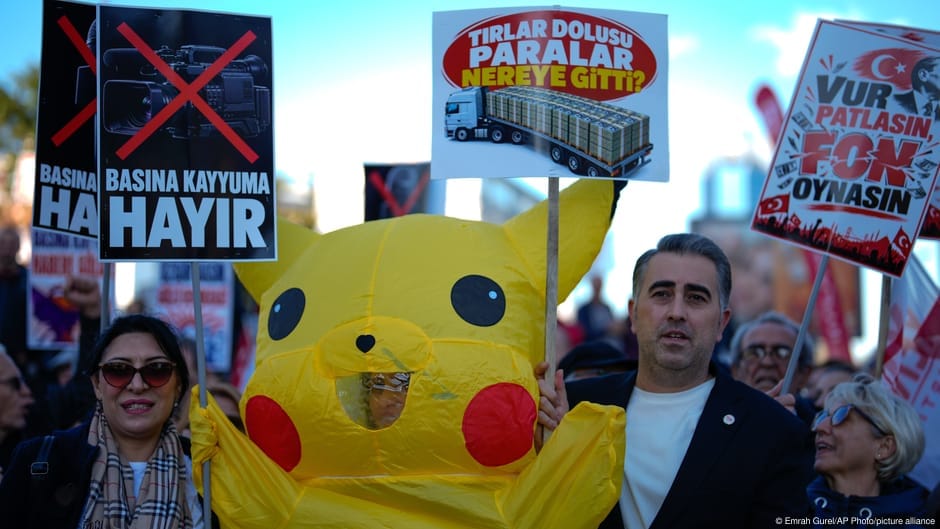
Photo via dw.com
Istanbul thousands protest TV raid, media crackdown
Thousands marched after police raided Sozcu TV on November 17, the third opposition broadcaster seized in just over a year.
What happened
Several thousand people marched through Istanbul on Sunday to protest a widening government crackdown on opposition and independent media outlets. The demonstration, organized by Turkey's main opposition Yeni Parti, came five days after police raided the Istanbul headquarters of Sozcu TV, arrested senior staff, and installed a government-appointed trustee to run the channel and its website. Sozcu TV is one of Turkey's last major opposition-aligned television channels.
The raid marked the third seizure of a pro-opposition media outlet in just over a year, following similar takeovers of Halk TV in October 2026 and Tele1 in October 2025. Reuters counts Sozcu as the sixth major news outlet taken over by the state since 2022. Halk TV remains off the air after its takeover; it has since broadcast religious content and prayers.
Protesters carried banners reading "We want freedom of thought, freedom of the press and freedom for journalists" and marched through Istanbul's Besiktas neighborhood chanting and whistling. According to media rights group MLSA, 25 journalists are currently imprisoned in Turkey. Reporters Without Borders ranked Turkey 163rd out of 180 countries in its 2026 Press Freedom Index.
The takeovers coincide with an escalating crackdown on coverage of a $20 billion investment fund scandal that emerged in September, raising concerns that authorities are using trusteeships to suppress scrutiny of government-connected figures.
Chanakya's Move
The government's move is a consolidation play: Erdogan's administration is eliminating the last broadcast-based opposition voice before an election cycle, using the judiciary as the instrument and a financial scandal as political cover. By framing the takeovers as responses to criminal investigations (rather than direct censorship), the government creates a veneer of legality while achieving a monopoly on mainstream TV. The simultaneous restriction on foreign investment in media suggests a parallel effort to prevent outside capital from reviving independent outlets. The opposition's protest signals it has recognized the trap but lacks legal or institutional tools to reverse it; the opposition's ability to organize was itself tested by social media restrictions. Erdogan's bet: a media landscape controlled enough to influence the electoral environment. The counter-move available to opponents is limited to strengthening digital alternatives (YouTube, social media) and international pressure, neither of which addresses the broadcast reach that still matters for older, less digitally-connected voters.