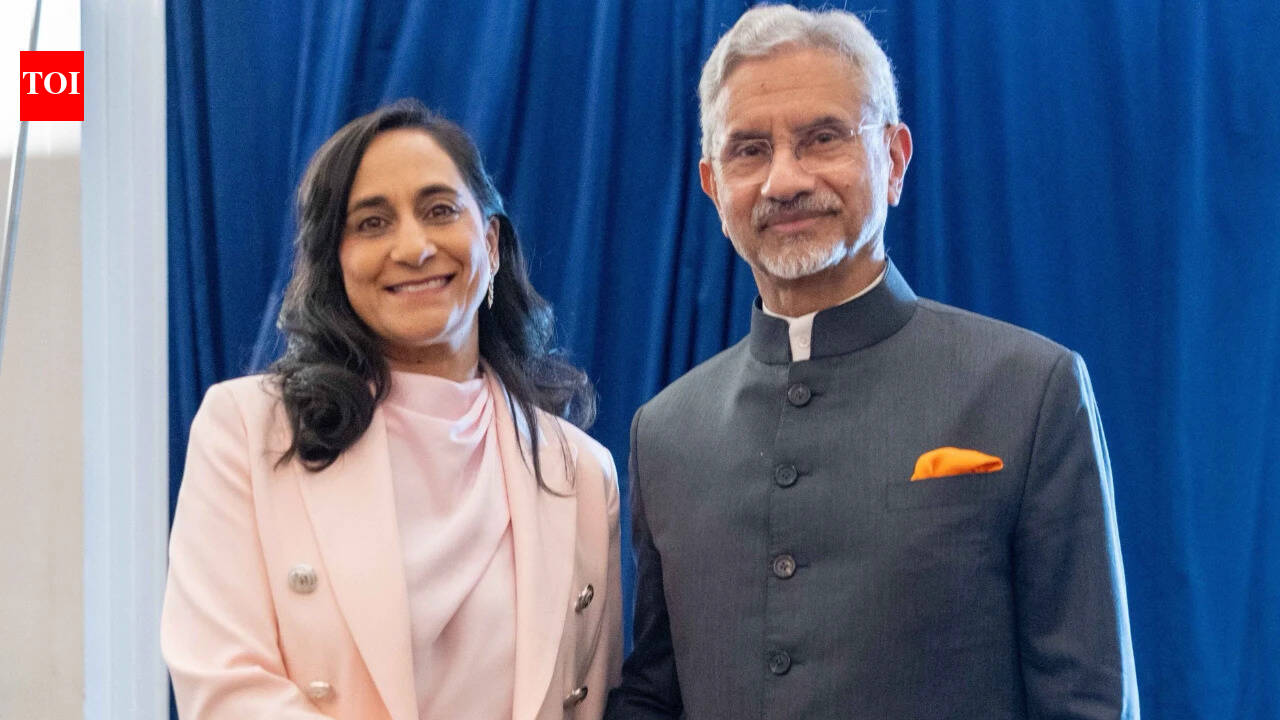
India, Canada signal further depth to reset with Jaishankar-Anand UNGA meeting
After two years of diplomatic rupture, India's top diplomat meets his Canadian counterpart at the UN to discuss converting high-level contacts into formal agreements on trade, energy, defense, and technology.
External Affairs Minister S. Jaishankar met Canadian Foreign Minister Anita Anand on the sidelines of the UN General Assembly in New York on September 26, describing their discussion as "productive" as both sides work to elevate their relationship. Neither official disclosed specific outcomes from the 15-minute meeting, but both signaled forward momentum in what has become a carefully orchestrated diplomatic reset after a two-year crisis.
The meeting caps a dramatic turnaround in one of Asia's most fractured bilateral relationships. In September 2023, former Canadian Prime Minister Justin Trudeau publicly alleged that Indian agents were behind the killing of Canadian Sikh activist Hardeep Singh Nijjar, triggering reciprocal expulsions of senior diplomats, a suspension of visa services, and a halt to trade negotiations. The two countries remained locked in a standoff through Trudeau's departure in early 2025.
The reset accelerated when Mark Carney became Canadian Prime Minister in May 2025. Carney and Prime Minister Narendra Modi met at the G7 summit in Alberta in June, agreeing to restart ministerial dialogues and pursue a Comprehensive Economic Partnership Agreement by end-2026. In October 2025, Anand visited India, and both sides announced a joint roadmap. Carney visited New Delhi in early 2026, where the two leaders set an expansive agenda around security, defense, and trade cooperation, and Modi is expected to visit Canada around December 2026.
Jaishankar's UNGA statement frames the relationship as moving toward conversion of these mechanisms into tangible agreements across trade, energy, technology, security, and education. The countries have restored senior diplomatic engagement and launched several joint working groups, though the reinstatement of high commissioners—expelled during the 2024 escalation—remains incomplete.
How could this affect you
Traced by who's actually in the path of this — not everyone is.
Likely
If you trade or invest in clean energy, critical minerals, or uranium supply chains
India and Canada are pursuing joint agreements on energy cooperation and critical minerals. A Comprehensive Economic Partnership Agreement is expected to be finalized by end-2026, potentially lowering tariffs and regulatory barriers. Previous bilateral trade reached ~$24 billion in 2024 despite the diplomatic freeze, suggesting strong underlying complementarity that formalized agreements could unlock.
Likely
If you are a Canadian or Indian national or diaspora member
The diplomatic reset includes discussions on people-to-people ties and education. Indian students formed Canada's largest international student cohort in 2023, but visa cuts and the diplomatic freeze disrupted this corridor. As high commissioners are reinstated and engagement structures formalize, student mobility and skilled migration could accelerate.
Possible
If you follow security cooperation in the Indo-Pacific
India and Canada have launched a Defense Dialogue and are coordinating on security issues including law enforcement. Both countries are rebuilding trust mechanisms after two years of expulsions and accusations. Deeper security cooperation could expand India's partnerships in counterterrorism and information sharing, particularly relevant given India's strategic focus on the Indo-Pacific.
Sources
Every claim here traces back to reporting you can read yourself.