
Photo via economictimes.indiatimes.com
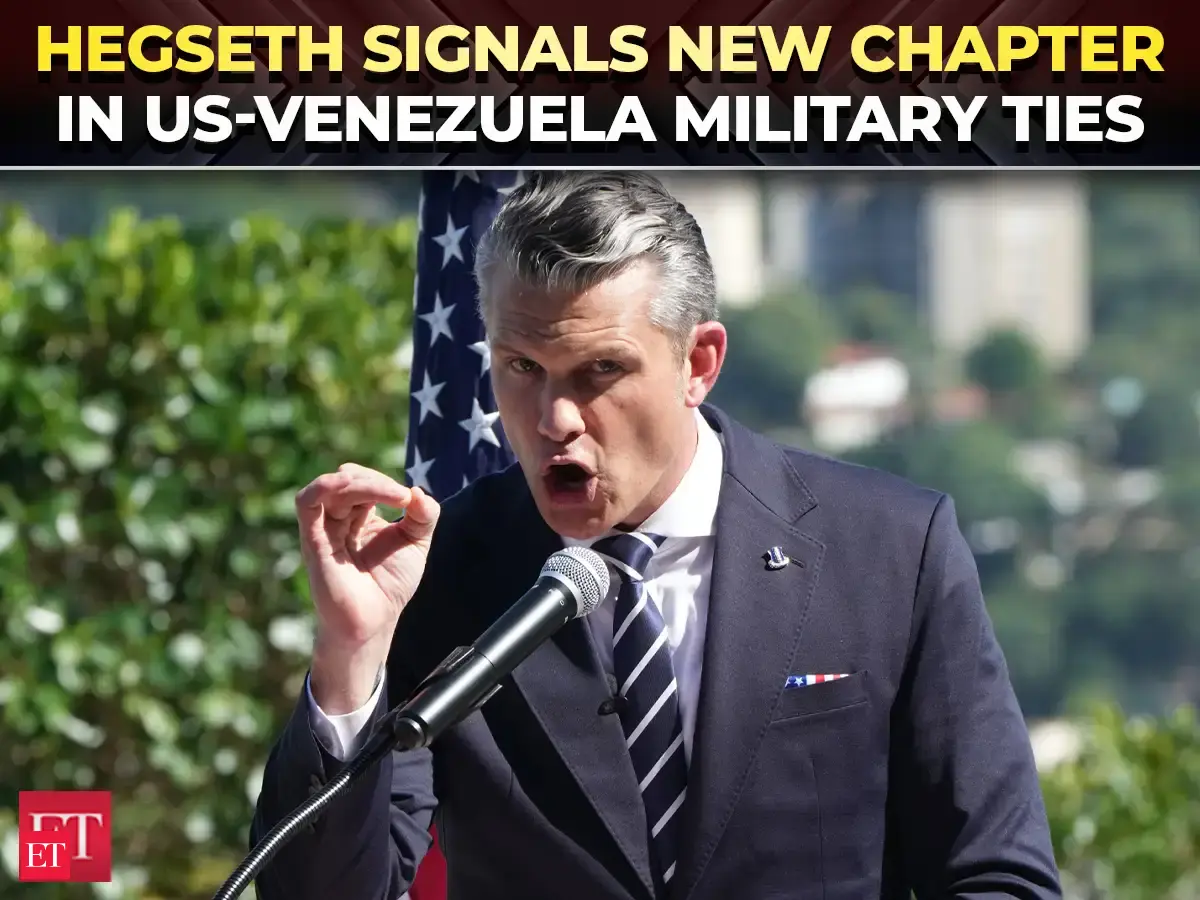
Hegseth signs military deal with Venezuela, hails transition from adversary
Defense Secretary announces joint training and intelligence-sharing agreement with interim government more than 10 months after US capture of Maduro.
What happened
US Defense Secretary Pete Hegseth announced a new military cooperation agreement with Venezuela on November 18 during an unannounced visit to Caracas, marking his first trip to the country since special forces captured President Nicolás Maduro in a January raid. Speaking alongside acting President Delcy Rodríguez at the presidential palace, Hegseth described the deal as reestablishing a defense partnership that includes joint training, intelligence sharing, defense equipment transfers, and strategic cooperation to combat narco-terrorism.
Neither official disclosed specific terms or timelines for the agreement. Hegseth characterized Venezuela as having evolved "from our most aggressive regional threat to a compliant security partner on its way to rebuilding its military alongside the United States." The visit underscores the Trump administration's expanding military engagement across Latin America.
After leaving Caracas, Hegseth flew to Colombia intending to discuss security cooperation and deliver a C-130 Hercules aircraft, though Colombian officials declined to sign a joint military operations agreement that would have enabled direct US military action on Colombian soil.
Chanakya's Move
Hegseth's move consolidates the Trump administration's gambit: transform a former regional adversary into a compliant military partner under interim leadership, anchoring US influence through oil deals and defense ties. The strategy bets that Rodríguez, lacking either Maduro's revolutionary legitimacy or democratic mandate, remains dependent on US backing for survival—turning her government into an instrument of US regional strategy. The play also illustrates a broader rebalancing: Colombia's rejection of joint military operations shows limits on US unilateralism even among allies, while Venezuela's acceptance under coercion signals how thoroughly the January raid restructured power. The counter-move is latent but real: if Rodríguez loses domestic control or if political pressure builds against US military presence, the deal could collapse, leaving the US exposed to accusations of propping up an illegitimate regime. Russia and China, now excluded from Venezuela, could also work to destabilize the arrangement through support for opposition elements or by offering Venezuela face-saving alternatives.