
Photo via euronews.com
Greek Students, Teachers March on Parliament Over Education Funding
About 10,000 demonstrators rallied across Greece on Wednesday, demanding higher state education spending amid a broader European youth revolt over rising living costs.
What happened
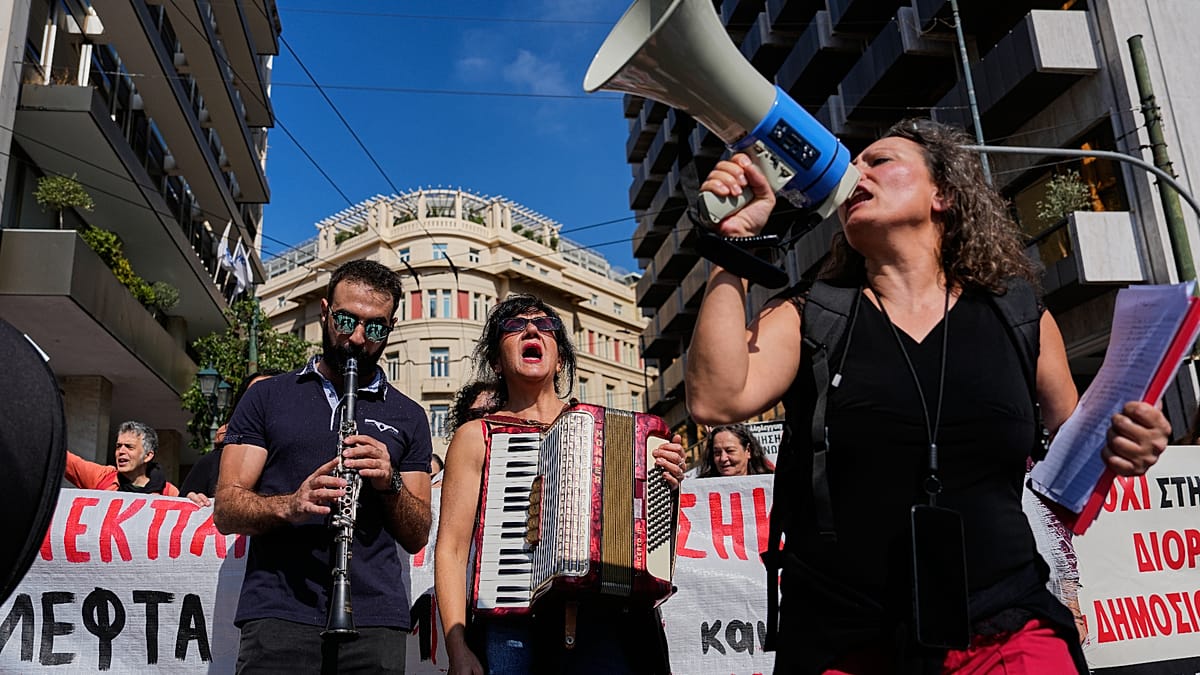
Thousands of students and teachers took to the streets across Greece on Wednesday, demanding higher state funding for education, better facilities, and smaller class sizes. Police reported roughly 10,000 demonstrators rallied peacefully in central Athens and its suburbs, with similar protests held in Thessaloniki, Patras, Larissa, and other cities. The march was organized in solidarity with growing youth-led demonstrations across Europe, particularly in France and Spain, with some banners reading "From Greece to France, we want public, free education." Students camped overnight outside Parliament at Syntagma Square before the daytime rally.
The protests targeted multiple issues facing Greece's education system and young people. Teachers walked out to protest low pay and staff shortages, with primary school teachers holding a 24-hour strike and secondary school teachers staging a three-hour stoppage. Demonstrators called for filling thousands of vacant teaching positions, making substitute teachers permanent, reducing class sizes, and improving deteriorating school facilities. A major Athens school complex had been closed for nearly two weeks following a gas leak scare, affecting about 4,000 students. University students also demanded more affordable housing, increased allowances, and expanded dormitory capacity, as rents have priced many out of city housing markets.
Education Minister Sofia Zacharaki acknowledged the housing pressure and said projects worth more than €733 million were underway for new student residences and facilities upgrades. However, demonstrators criticized these efforts as insufficient. Greece currently spends 3.3 percent of its national output on education, among the lowest in the European Union and far below the EU average of 4.7 percent. The average monthly salary of €1,500 remains stuck at 2009 levels.
The protests add political pressure to Prime Minister Kyriakos Mitsotakis' centre-right government as the country heads toward elections in mid-2027. Greeks continue to struggle with stagnant wages, high rents, and rising energy costs years after the country's debt crisis. Most demonstrations remained peaceful, though some disturbances were reported in Athens' Omonia area, with police deploying stun grenades and protesters reportedly throwing Molotov cocktails and stones.
Chanakya's Move
This is fundamentally a domestic political challenge for Mitsotakis, not a strategic move by an external actor. Students and teachers are signaling that the government's education and housing policies are insufficient, particularly in the face of comparable mobilization across Europe. The timing—less than a year before elections—amplifies the pressure. Mitsotakis could counter by accelerating visible investments in housing and teacher hiring, framing them as solutions, or by resisting what he may view as excessive demands and betting that the protests subside before voters decide. The reference to French protests shows cross-border solidarity on a material issue (education, housing, cost of living), but there's no evidence of coordinated strategy—rather, parallel grievances in different countries. The key variable is whether the Greek government can deliver tangible improvements (faster housing projects, teacher hiring, facility repairs) without derailing its fiscal consolidation agenda.