
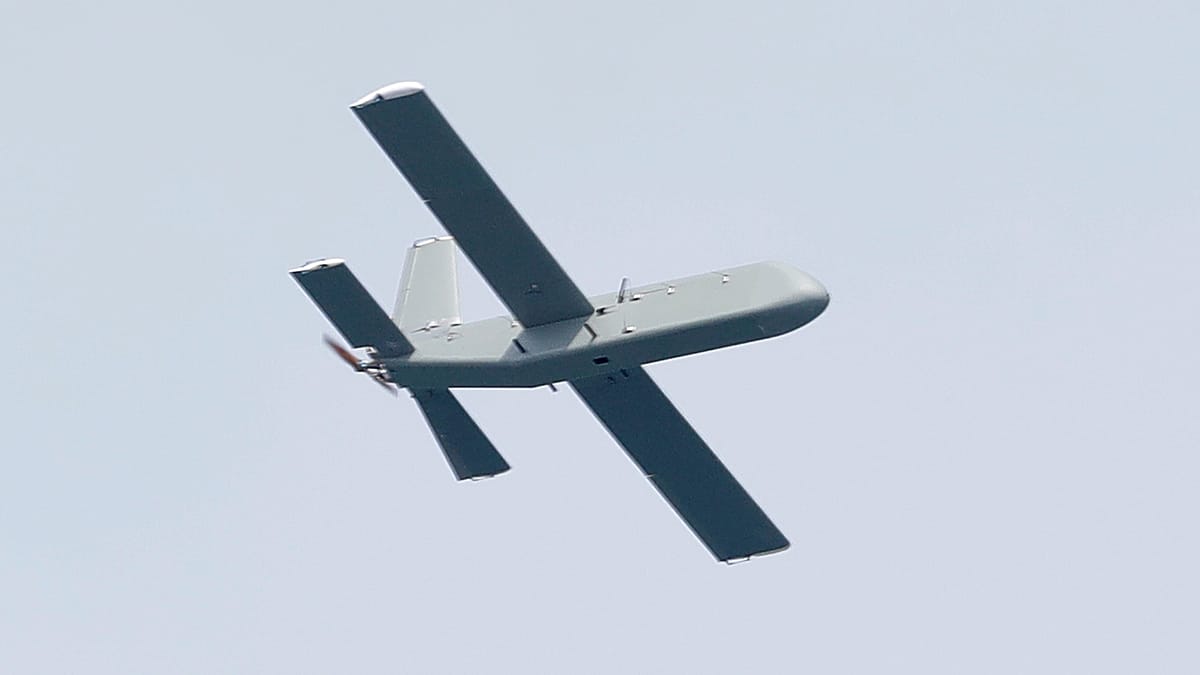
Photo via euronews.com
Germany Tests Kamikaze Drones and AI Targeting in Lithuania
The Bundeswehr's first tactical trials of loitering munitions and Clarity AI software near Belarus mark an acceleration of NATO's eastern flank defense capabilities.
What happened
Germany's army conducted its first tactical tests of kamikaze drones during military drills in Lithuania on November 22. At the Rudninkai training ground near the Belarusian border, loitering munitions from German companies Helsing and Stark, equipped with inert warheads, struck main battle tanks while army chief Christian Freuding observed. The tests were part of Freedom Shield, the largest German military drills in Lithuania to date, involving approximately 3,800 personnel from eight NATO countries.
Parallel to the drone trials, German troops tested Clarity, an AI-supported targeting platform developed by Helsing that processes satellite, drone and sensor data to recommend action faster than human analysts. Clarity is designed to reduce delays in traditional targeting procedures by identifying relevant battlefield information and presenting it to military personnel more efficiently.
The tests mark a significant step for Germany, which decided only in 2025 to procure loitering munitions after years of political controversy. Framework contracts with Helsing and Stark, signed in February 2026, include orders worth approximately 540 million euros in an initial phase, with capacity to reach 1 billion euros per supplier.
The trials occur as Germany prepares to permanently station Panzerbrigade 45 in Lithuania, with 5,000 troops and 2,000 vehicles scheduled to be fully operational by the end of 2027. Some 1,800 German troops are already deployed there. This deployment reflects Germany's formal military strategy, which prioritizes NATO's eastern flank defense amid Russia's military rebuilding and sets 2029 as a critical readiness date.
Chanakya's Move
Germany is betting that mastery of loitering munitions and AI-assisted targeting will close a critical capability gap against Russia before 2029, the internal deadline for readiness. By field-testing both technologies together at scale in Lithuania—with 1,800 troops already on the ground and 5,000 by 2027—Berlin is signaling that this is not an isolated exercise but operational preparation. The choice of location near Belarus amplifies the message: this is about forward defense, not rear capability development. Germany's move also validates domestic defense startups (Helsing, Stark) over foreign suppliers, reinforcing European defense autonomy and reducing dependence on U.S. systems. The tests create institutional momentum: once troops train on these systems in theater, procurement pressure from commanders becomes harder to resist. Russia could counter by accelerating production of air defense systems or electronic warfare capabilities that target AI-guided munitions, or by signaling readiness to test NATO resolve sooner than 2029. The reputational risk to Germany is real—if the AI system fails in live conditions or causes civilian casualties in future operations, the domestic backlash against armed drones, which persisted for years, could resurface.