
Photo via dw.com
EU unites on Ukraine peace talks team as Russia hedges
European leaders agreed on a joint delegation while Moscow conditioned participation on Europeans showing 'readiness to contribute' to peace efforts.
What happened
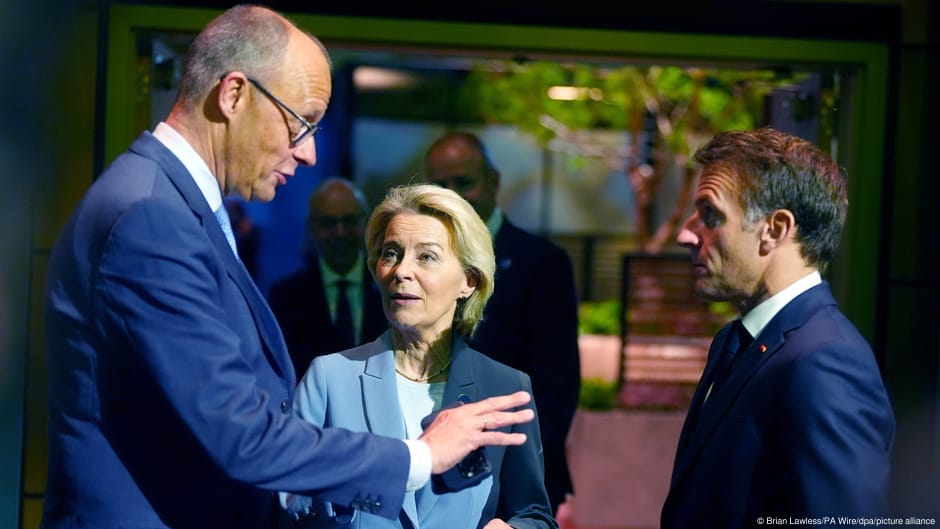
European Union leaders agreed on November 13 that the EU's institutions and five major powers—France, Germany, Italy, Poland, and the United Kingdom—will jointly represent Europe in ongoing Russia-Ukraine peace negotiations. European Council President António Costa announced the decision after an informal leaders' summit in Dublin. The team will include national security advisers at the technical level, though Europe has not yet chosen political-level representatives.
The EU move came after US envoys Jared Kushner and Steve Witkoff announced on November 12 that Russia had agreed to European participation following three days of trilateral talks in Abu Dhabi. However, the Kremlin immediately cast doubt on that claim. On November 13, Kremlin spokesperson Dmitry Peskov said Russia had not committed to including Europeans, stating instead that Moscow would decide only once it understood Europe's "genuine intention and readiness to contribute to the peace process." Russia's Foreign Ministry went further, saying it was unaware of any agreement to include European powers in the negotiations.
European leaders emphasized that any peace settlement must address Ukraine's security and that Ukraine alone can decide on matters concerning its territory and sovereignty. Costa stressed that "Europe must speak with one clear and united voice" while declining to appoint a single envoy despite mounting pressure. The disagreement over European participation reflects deeper tensions: Russia has sought to broaden talks to include demands for a new European security architecture, which many European officials view as an attempt to sideline discussions of an immediate ceasefire.
Chanakya's Move
Russia's hedging strategy is deliberate: by setting conditions on European participation rather than outright refusing it, Moscow keeps the diplomatic door nominally open while retaining leverage. The Kremlin appears to be testing whether Trump's envoys will pressure Europe to abandon certain positions or concessions in exchange for a seat at the table. Russia's demand that Europe demonstrate "readiness to contribute to peace" is vague by design—it allows Moscow to move the goalposts. Meanwhile, Europe's unified team-based approach (rather than a single envoy) reflects internal divisions over whether to negotiate at all and on what terms. Putin's broader play is to shift focus from an immediate ceasefire to a multi-track discussion of European security architecture, where Russia can press demands it previously abandoned. Europe's willingness to show up to the table, even conditionally, may already represent a concession in Putin's eyes.