
Photo via arabnews.com
Erdogan Pledges Support to Saudi Arabia as Houthi Attacks Surge
Turkish president and regional allies activate defense pact after deadly missile strikes on Riyadh airport kill at least 20 and wound hundreds.
What happened
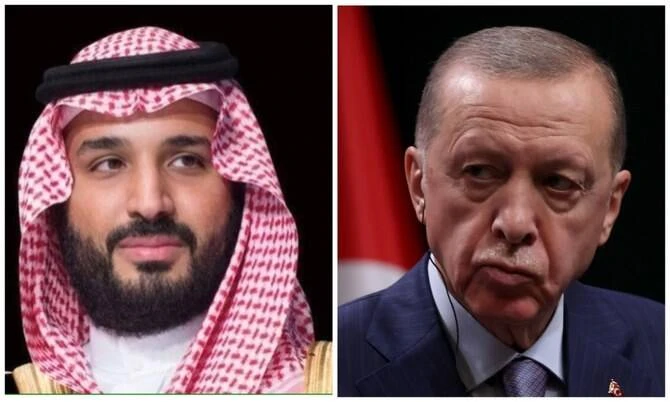
Turkish President Recep Tayyip Erdogan condemned Houthi attacks on Saudi Arabia in a phone call with Crown Prince Mohammed bin Salman on Tuesday, pledging that Ankara would stand by Riyadh amid an escalating campaign of ballistic missile and drone strikes. Since October 6, Yemen-based Houthi forces have launched a series of attacks on Saudi airports—including multiple strikes on King Khalid International Airport in Riyadh—killing at least 20 people and wounding over 370.
Erdogan expressed condolences for the victims and reaffirmed Turkey's commitment to Saudi security. The gesture comes as Turkey, Saudi Arabia, and Pakistan activate their Mecca Joint Defence Agreement, signed in August 2026, which treats an armed attack on one member as an attack on all three. On October 5, the three nations held an emergency meeting in Riyadh and pledged to implement collective-defense commitments, prepare for rapid deployment of military forces, and coordinate defense capabilities.
Pakistan has already deployed military assets to support Saudi defense: Reuters reported in May that Islamabad stationed approximately 8,000 troops, a squadron of JF-17 fighters jointly developed with China, and a Chinese-made HQ-9 surface-to-air missile system to the kingdom. Pakistani Defence Minister Khawaja Muhammad Asif said Islamabad would cooperate with Riyadh "in every possible way" under their mutual defense pact, though the extent to which these systems will be deployed remains unclear.
The attacks have disrupted Saudi air traffic significantly. King Khalid International Airport in Riyadh suspended operations following the October 10 strike that killed 13 people and wounded over 300—the deadliest single attack on the kingdom in more than a decade. The U.S. Embassy issued a Level 3 travel advisory warning Americans to reconsider travel to Saudi Arabia due to the risk of drone and missile strikes by Iran-backed forces.
President Trump described the attacks as "terrible" and said the U.S. is evaluating whether to join Saudi strikes against the Houthis, though the Trump administration previously resisted deeper involvement in the conflict. The escalation marks a new phase in the broader Iran war, as Houthi forces have intensified operations across multiple theaters simultaneously.
Chanakya's Move
Erdogan's call serves multiple strategic aims: it cements Turkey's role as a regional power broker and security provider by activating the Mecca Pact in real time, signals to Washington that regional allies can manage escalation without full US involvement, and positions Turkey alongside Saudi Arabia and Pakistan as a credible counterweight to Iran-backed forces. The activation of the three-nation defense framework is the real move—it tests whether the formal pact translates into coordinated military action or remains symbolic. Houthi forces are betting that sustained pressure on Saudi infrastructure and civilian targets will force Riyadh to exhaust resources or negotiate, while also probing whether regional allies will follow through with concrete military support. Turkey and Pakistan's follow-through—and the willingness of Pakistan's Chinese weapons to prove effective in combat—could reset expectations about non-Western military coalitions and their capacity to deter Iranian proxies.