
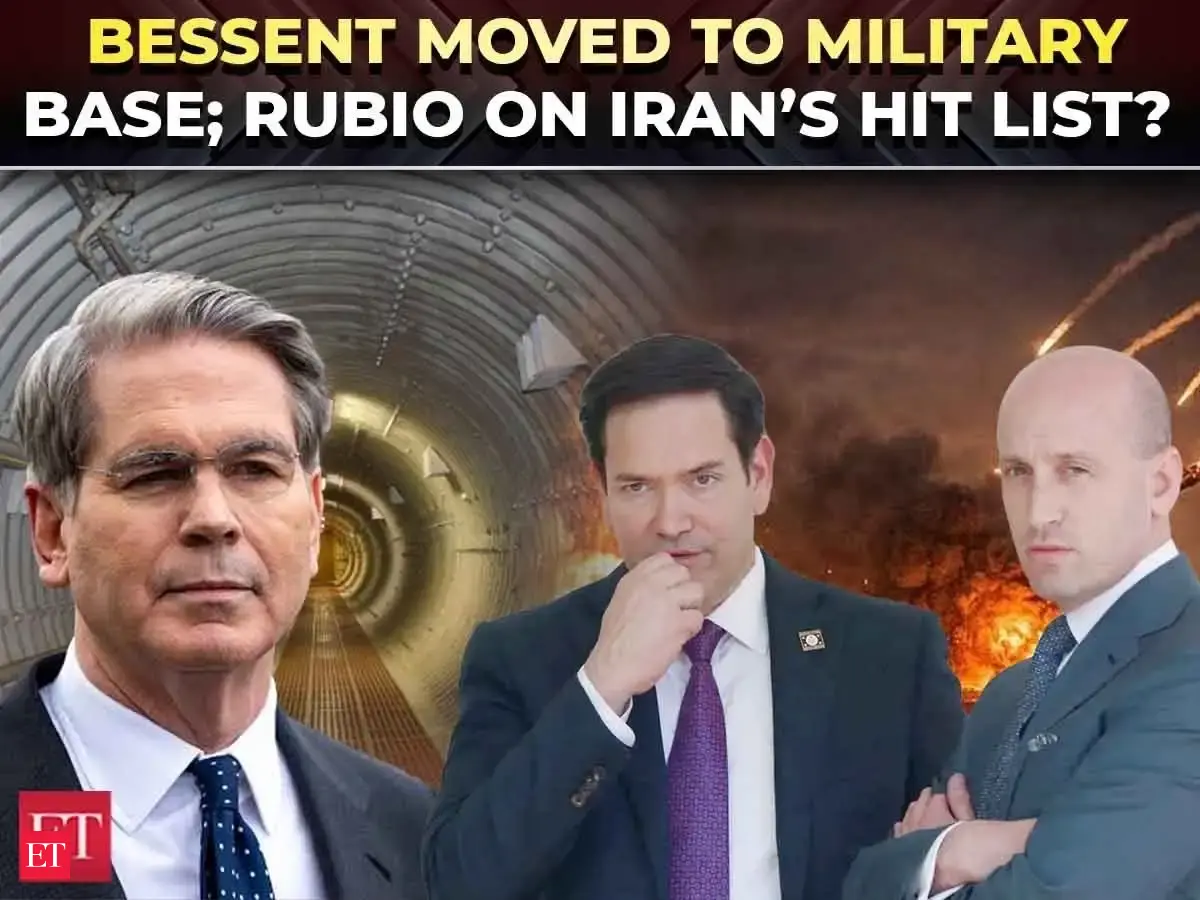
Photo via economictimes.indiatimes.com
Bessent Relocated to Military Base Over Iran Threats
Treasury Secretary joins multiple cabinet officials on military bases as U.S. assessments show Iranian targeting advancing to a more active stage.
What happened
Treasury Secretary Scott Bessent has moved from his Washington, D.C. home to an undisclosed U.S. military base following threats attributed to Iran, according to reports from the New York Times and Reuters on November 11. The relocation came after the Wall Street Journal published an aerial photo of Bessent's Georgetown mansion in January 2025, which allowed his address to be geo-located and later targeted by Iranian operatives.
Bessent's role leading Operation Economic Outcast, the Trump administration's sanctions and financial pressure campaign against Iran since August, made him a prominent target. The campaign has included a naval blockade of Iranian ports and sanctions on Iranian aviation, oil, auto, and rail industries. U.S. officials now assess that Iranian plotting against current and former American officials has reached a more advanced stage, with intelligence regarding threats to Bessent cited as part of that assessment.
Bessent becomes the third current Trump Cabinet member to relocate to military housing due to security concerns, following Secretary of State Marco Rubio and Defense Secretary Pete Hegseth, who live at Fort McNair in Washington, D.C. White House Chief of Staff Stephen Miller also moved to military housing, though his relocation was not attributed to Iranian threats. A Treasury Department spokesperson said Bessent "will not be deterred by the Iranian regime's threats" and remains committed to executing the economic campaign.
The threats come amid a stalled negotiation landscape. Senior Iranian officials, including an adviser to Parliament Speaker Mohammad Bagher Ghalibaf, have warned that Tehran could pursue preemptive military action if the U.S. continues tightening economic pressure, or faces further military strikes from Washington. The adviser claimed the U.S. had proposed a two-week timeframe after which President Trump would decide on military action. While U.S. officials acknowledge that Iran's ability to carry out large-scale attacks in the United States remains limited, they are taking specific threats against individual officials seriously enough to provide enhanced security measures.
Chanakya's Move
The Trump administration is betting that sustained economic pressure through Operation Economic Outcast can coerce Iran into a deal without renewed large-scale military engagement. By relocating key officials like Bessent to military bases, the administration simultaneously signals resolve (not deterred by threats) while managing visible security risks. However, Iranian officials are reading the same signals differently: they interpret the economic stranglehold as an existential threat that could force their hand toward preemptive action. The narrow two-week window that Iranian adviser Mohammadi cited suggests both sides believe a decision point is imminent. Trump's strategy relies on Iran capitulating under economic pressure; Iran's counter-strategy is to make the cost of that pressure high enough (through assassination threats and escalation warnings) that the U.S. flinches first. The relocation of Bessent and other cabinet members may signal internal U.S. confidence in the economic approach, or it may signal that intelligence assessments of Iranian plotting have advanced sufficiently that even economic architects need fortress-level protection.